
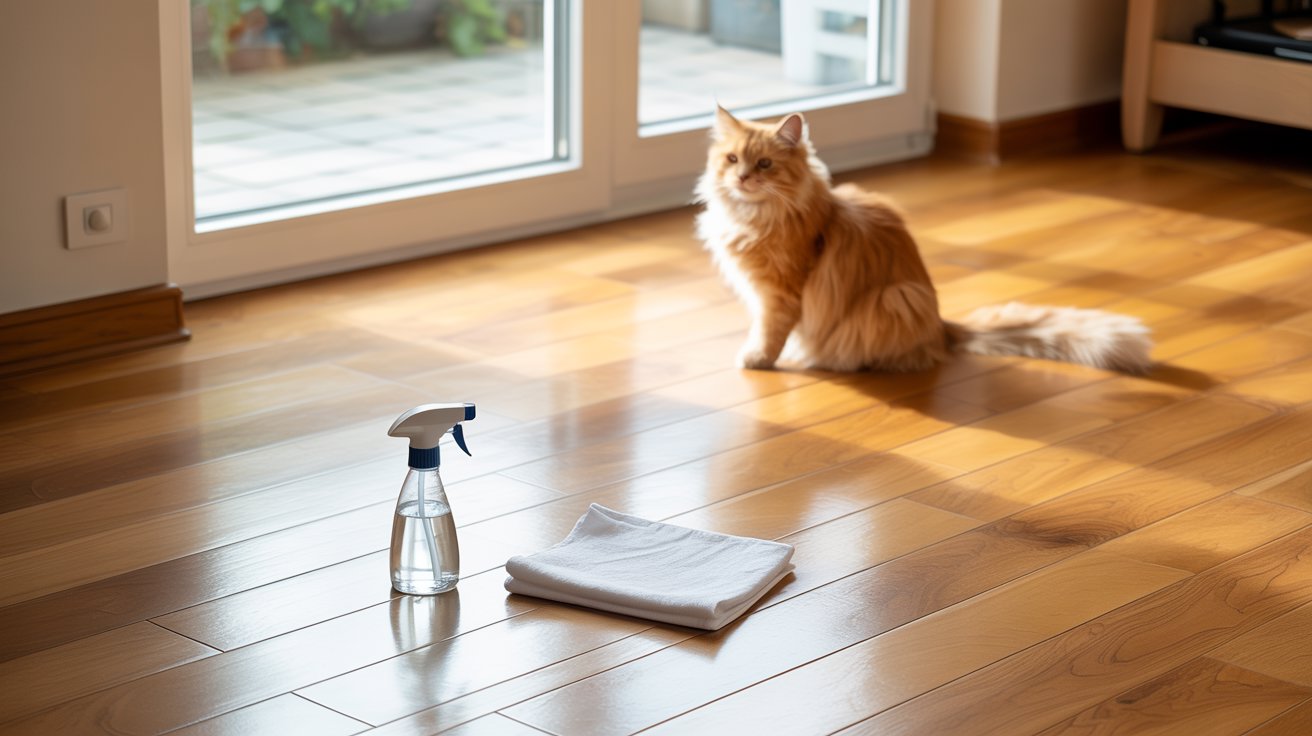
The Best Ways to Remove Cat Urine Smell from Wood Floors
Why Wood Floors Are Especially Vulnerable to Cat Urine
If you share your home with a feline companion, you know that accidents happen — even with the most well-trained cats. But when your cat misses the litter box and targets your beautiful hardwood floors, the consequences can be far more serious than a simple cleanup. Wood is a porous material, meaning it readily absorbs liquids. Cat urine that isn't treated quickly can seep deep into the grain, causing warping, staining, and a persistent odor that seems impossible to eliminate. The good news? With the right approach, you can tackle the problem effectively and protect your floors for years to come.
As someone who has helped countless Saskatoon homeowners navigate the realities of maintaining a beautiful home, I can tell you that cat urine is one of the most common — and most underestimated — threats to hardwood floors. Here's everything you need to know to handle it like a pro.
Why Cat Urine Is Harder to Remove Than You Think
Not all pet urine is created equal. Cat urine is significantly more concentrated than that of dogs or other pets, and it contains uric acid crystals that bond stubbornly to surfaces. Regular household cleaners may mask the smell temporarily, but they cannot break down these crystals at the molecular level. That's why you might think the problem is solved — until a humid day brings the odor roaring back.
Speed is everything. The longer urine sits on wood, the deeper it penetrates, and the harder it becomes to remove. Acting fast gives you the best possible outcome.
Find the Problem Areas First
Before you start cleaning, make sure you've identified all affected areas — not just the obvious ones. Old or dried urine stains are often invisible to the naked eye. A UV black light (ultraviolet flashlight) is an incredibly useful tool for this purpose. Simply dim the lights and scan your floors with the black light; urine stains will glow a yellowish-green color, revealing spots you might otherwise miss entirely. This step is especially important in homes where accidents may have gone unnoticed for some time.
Step-by-Step: How to Remove Cat Urine Smell from Wood Floors
- Step 1 — Blot It Up Immediately: As soon as you discover the accident, grab paper towels or a clean cloth and blot — don't rub — the area to absorb as much urine as possible. Rubbing spreads the urine further into the wood grain and makes the problem worse.
- Step 2 — Apply an Enzyme Cleaner: This is the most important step. Use a high-quality enzyme cleaner specifically formulated for pet urine. Enzyme cleaners work by breaking down the uric acid crystals at the source, eliminating odor permanently rather than simply masking it. Follow the product instructions carefully, and allow adequate dwell time for the enzymes to do their job.
- Step 3 — Try a DIY Vinegar Solution (Optional): If you don't have an enzyme cleaner on hand, mix 1 cup of white vinegar with 1 cup of water. Lightly dampen the affected area, let it sit for 5–10 minutes, then blot dry. Important: Do not use this method on waxed or non-sealed wood, as it can damage the finish.
- Step 4 — Use Baking Soda: Once the area is dry, sprinkle a generous layer of baking soda over the spot. Let it sit for several hours or overnight to absorb any remaining odors, then vacuum or sweep it up.
- Step 5 — Ventilate the Space: Open windows, run fans, or use a dehumidifier to increase airflow. Fresh air helps eliminate lingering moisture and odors, and reduces the risk of the dampness causing further wood damage.
Important Tips to Keep in Mind
- Always test any cleaning solution in a hidden, inconspicuous area first to make sure it won't damage your floor's finish.
- Never use ammonia-based cleaners. Ammonia mimics the scent of urine and can actually encourage your cat to re-mark the same spot.
- For deep or set-in stains, repeat the cleaning process multiple times — patience is key.
- If the odor persists despite repeated treatments, the urine may have soaked through to the subfloor. At that point, it's worth consulting a flooring professional who can assess whether the subfloor needs treatment or replacement.
- If individual planks are severely warped, stained, or structurally compromised, replacing those specific boards may be the most practical solution. A flooring professional can often replace individual planks without redoing the entire floor.
- Consider having your wood floors sealed or refinished once the issue is resolved. A quality sealant creates a protective barrier that makes future accidents much easier to clean up before they cause lasting damage.
Preventing Future Accidents
Once your floors are fresh and clean, a few simple habits can help prevent the problem from recurring. Litter box placement matters — ensure boxes are in quiet, accessible locations and cleaned regularly. Cats are fastidious creatures and may avoid a dirty box. Placing waterproof mats around litter areas can also catch any tracked litter or minor spills before they reach your floors. If your cat is having frequent accidents outside the box, a visit to the veterinarian is always a good idea, as this can sometimes signal an underlying health issue.
A Clean Home Is a Happy Home
Dealing with cat urine on wood floors isn't the most glamorous part of homeownership, but with the right knowledge and a quick response, it's absolutely manageable. Your floors — and your cat — will thank you for it.
Looking for more practical tips to help you maintain and protect your home? Visit housesinsaskatoon.com and explore our growing library of homeowner resources. From maintenance advice to local market insights, we're here to help Saskatoon homeowners make the most of their investment — every step of the way. Feel free to reach out anytime; I'd love to help!